
There is a pattern we see repeatedly with medical clinics and med spas that are stuck in a growth plateau. They are running promotions, offering discounted first visits, trying to drive as much new patient volume as possible. The offer works. People come in. But the practice never seems to actually grow. The calendar fills up and empties out. Revenue stays flat. The team is busy but the business is not building.
The problem is not the volume. The problem is the type of patient that cheap offers attract.
Who Responds to Discount Offers
A fifty dollar introductory visit or a heavily discounted first treatment does one thing very well. It brings in people who were looking for a deal. That sounds like a good thing until you realize that a patient who chose you because of your price is also the first patient to leave when they find a better price somewhere else.
These patients are not disloyal because they are bad people. They are operating exactly as the offer trained them to. The offer said the price was the point. So the price is the point. When the promotion ends and the real rate kicks in, a significant portion of those patients do not come back. They move on to the next deal. You invested in acquiring them, spent time with them, put your staff and your facility to work for them, and they walk out the door.
This is what we call the revolving door problem. High intake, low retention. Lots of activity, not much to show for it.
The Patient You Actually Want
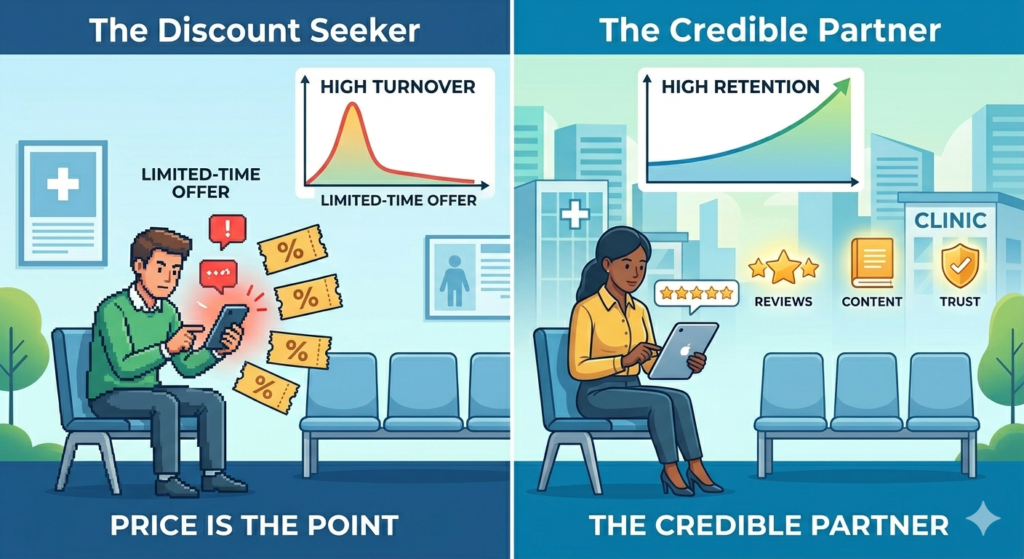
The patient worth building your practice around is problem aware and committed to solving it. They have a real concern, they have done their research, and they are looking for a provider they can trust. They are not shopping based on price. They are shopping based on credibility.
That patient finds you through your reviews, your content, your website, and your reputation online. They arrive already having formed an opinion about your practice before they ever call. They book. They show up. They follow through on treatment plans. They come back. They refer people they know. That is a patient who contributes to the long term health of your business, not just your appointment count for the week.
The difference between that patient and the discount seeker is not luck. It is how you positioned yourself online and what kind of signal your marketing sent before they ever made contact.
What to Do Instead
The shift is from lead chasing to brand building. Instead of running promotions designed to generate volume, invest in the things that attract the right patients consistently over time.
Build a review profile that signals trust. Create content that educates and establishes your expertise. Make sure your website clearly communicates who you are and what you specialize in. Run ads that speak to a patient with a real problem looking for a real solution, not a patient hunting for the lowest price in the area.
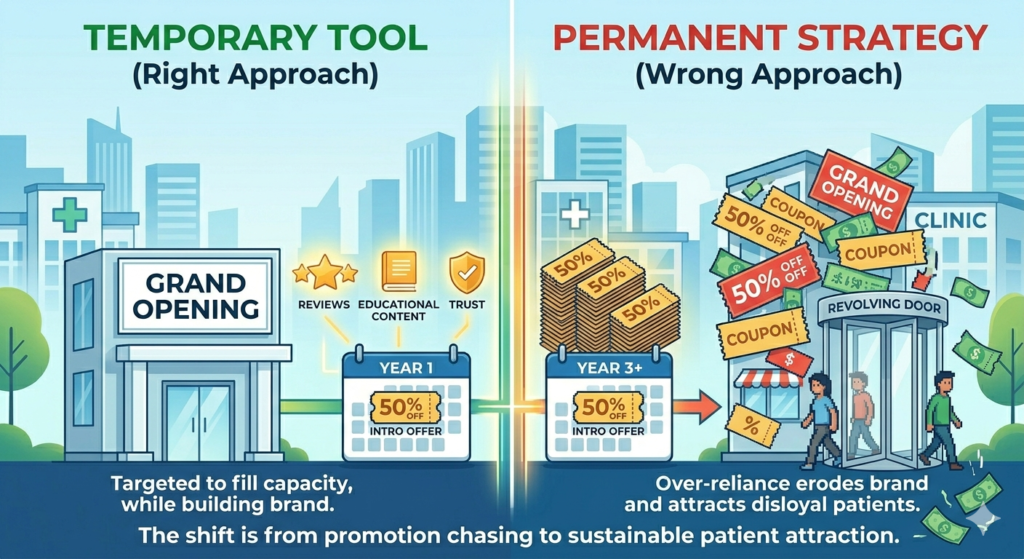
This approach takes longer to build than a discount campaign. But it compounds. Every review you earn, every piece of content you publish, every patient who comes in through organic search or a genuine referral is a brick in something that keeps paying off. A discount campaign generates a short term spike that disappears when the offer ends.
A Note on Promotions
Discount offers are not always the wrong move. For a brand new location that needs to build initial volume and does not have an established reputation yet, a well-placed introductory offer can help fill the calendar while longer term marketing gains traction. The problem is when it becomes the permanent strategy rather than a temporary tool.
If your practice has been open for more than a year and discounts are still your primary patient acquisition method, that is worth examining. It is a sign that the brand has not been built strongly enough to attract patients on its own merits. And that is a fixable problem, but only if you stop relying on the shortcut long enough to do the real work.
PowerUp Media helps healthcare practices build patient acquisition systems that combine SEO, paid ads, content, and brand strategy.
If your clinic is ready to grow the right way, we should talk.
